Founded in 1923 as a wholesale distributor of electrical equipment in Tokyo, YAMAGIWA began importing
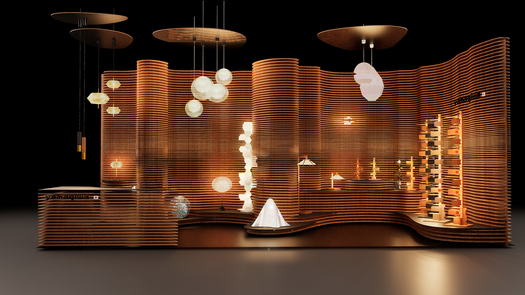
lighting fixtures from Europe and the United States in 1960, and then launched its own original collections, devoted mainly to architectural lighting. In 1994 it began a collaboration with the Frank Lloyd Wright Foundation, obtaining a license to produce lamps designed by the great master. True to the slogan "The art of lighting," the company creates design workshops, collaborates with reputable designers, such as Toyo Ito and Tokujin Yoshioka, and entrusts production to skilled craftsmen. In the 100th year since its founding, YAMAGIWA is confirmed as a solid player in the industry, capable of offering a wide range of products characterized by refined design, craftsmanship and high technical performance. Today the company is present in more than 20 countries and on all continents, thanks to an extensive network of distributors.
The FRANK LLOYD WRIGHT by YAMAGIWA Collection
That the great American master Frank Lloyd Wright was inspired by Japanese culture is well known. His organic vision of architecture and design, which sees the harmonious integration of man and nature, is fully expressed in the
lamps of the TALIESIN series, designed in 1933. YAMAGIWA, as the only brand in the world authorized to reproduce them, offers several models in its catalog, reissued and updated while respecting the original designs. The
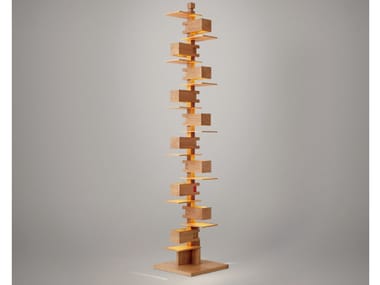
TALIESIN 2 floor lamp consists of a series of wooden boxes, stacked along a vertical support measuring 2 meters, inside of which is the light source. The lamp provides soft, enveloping diffused lighting, which in the master's intentions mimics the natural light filtered by trees, thanks to the wooden panels interposed between the boxes, which reflect the light. Whether on or off, TALIESIN represents a striking sculptural composition, and is declined in 5 wood essences: walnut, cherry, oak and black-stained chestnut. TALIESIN is also offered in a pendant version, such as in the
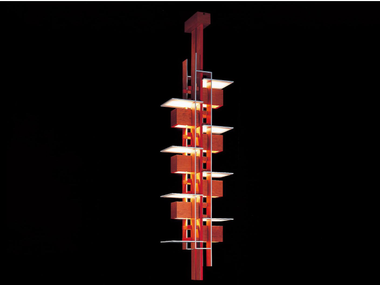
TALIESIN 3 PENDANT model. Designed by the maestro for a theater, it consists of the usual wooden boxes connected to a central vertical support. Designed for the master's home in Taliesin, Wisconsin, the
TALIESIN 1 table lamp provides a soft, subdued light, thanks to the acrylic shade that resembles rice paper. The shape is inspired by Japanese houses, with a roof-shaped shade and wooden frame, available in walnut or cherry. TALIESIN 1 is declined in mini and floor versions. The
ROBIE wall lamp, designed by Frank Lloyd Wright for the Frederik Robie House, consists of a glass globe supported by four wooden arms, which in turn are connected to a square frame. This stratagem makes the sphere housing the light source appear to float in space.
YAMAGIWA lamps, the designs of great masters contemporary and past
The YAMAGIWA catalog offers collections signed by great contemporary and past masters, handcrafted by Japan's best artisans. The
MAYUHANA collection bears the signature of Toyo Ito, winner of the Pritzker Architecture Prize, the "Nobel" of architecture, in 2013. Lightness and transparency, the stylistic hallmark of Toyo Ito's work, can be traced in this series of lamps made of fiberglass. The thread of the fiber wraps around itself to form the lampshade, like a silk cocoon from which a soft, soft light filters. Similar to a traditional Japanese lantern, the lamp is declined in black and white colors, and is available in a wide choice of patterns and sizes. Another great Japanese master featured in the YAMAGIWA catalog is
Shiro Kuramata, who in 1972 designed the iconic
K-Series lamp, also known as the Oba-Q. The opalescent acrylic resin shade is made from a single hot-pressed sheet in the evocative shape of a drape of white fabric that seems to float in space. YAMAGIWA also features the creations of
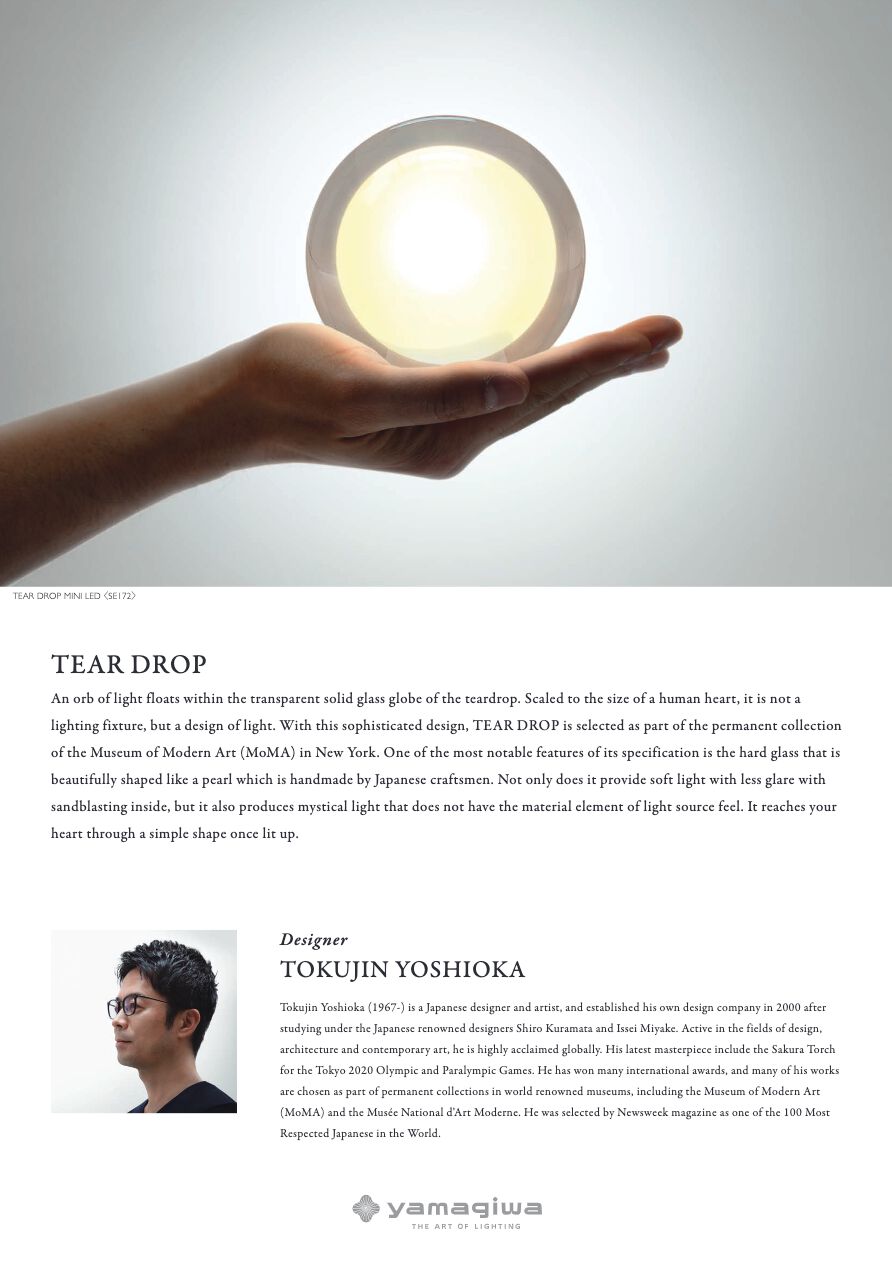
Tokujin Yoshioka, who has already achieved major milestones in 20 years, including awards and works exhibited in prestigious museums. These include the
Tear Drop lamp, which is part of the permanent collection at MoMA New York. The shade, made of opaline glass, resembles the shape of a pearl, and is set in a clear glass globe, which helps to diffuse a soft, ethereal light. There are not only Japanese designers in the YAMAGIWA catalog, in fact since 1997 it has been producing under license a design by Scandinavian designer
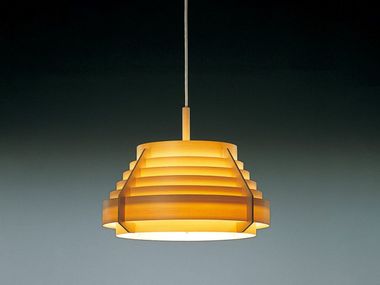
Hans-Agne Jakobsson. This is the
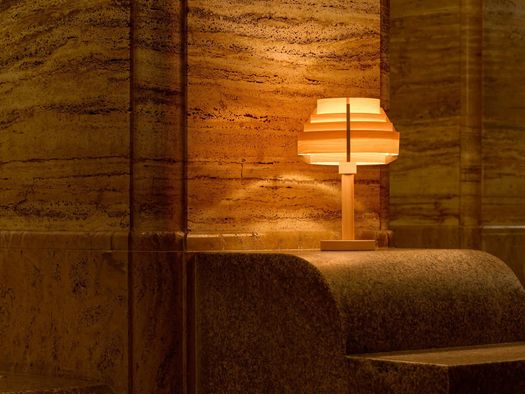
Jacobsson Lamp, made from thin veneers of pine wood, which allow a warm, soft light to filter through. The lampshade, composed of rings of different diameters stacked on top of each other, is characterized by its essential design and extraordinary lightness. Jacobsson Lamp is declined in pendant, table and floor versions.