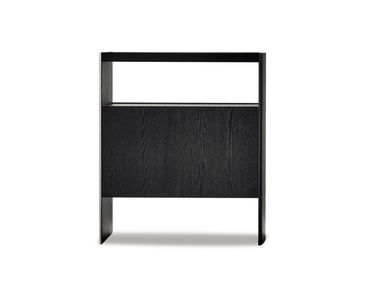
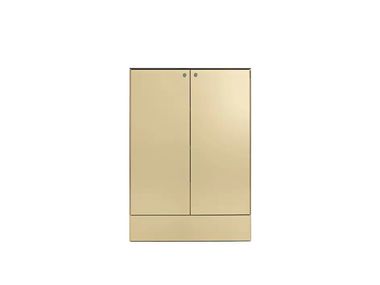
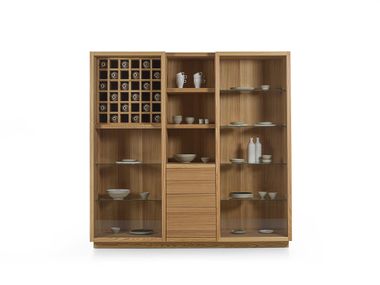
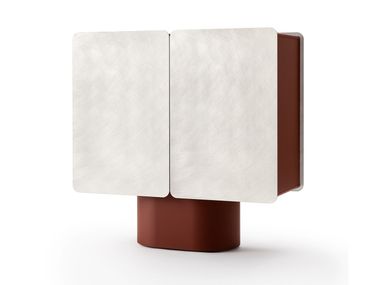
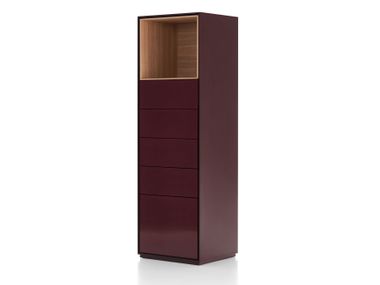
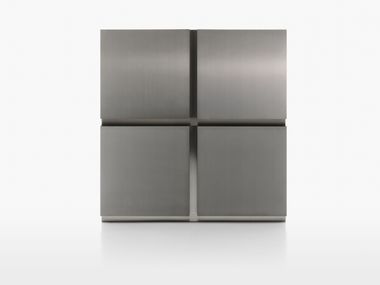
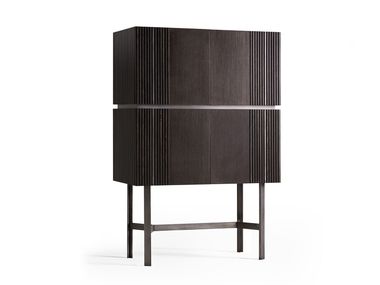
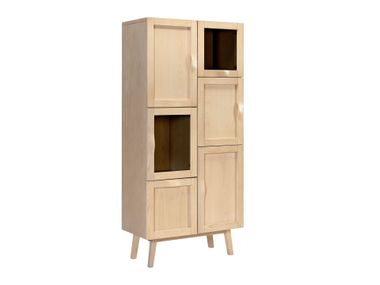
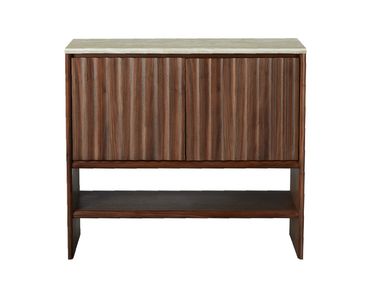
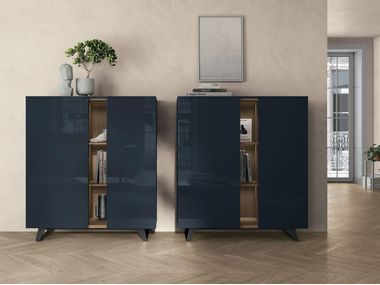
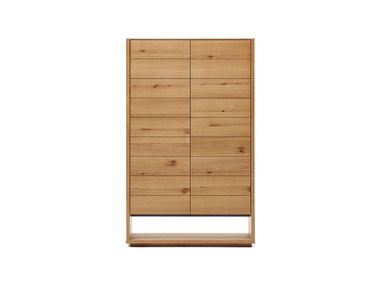
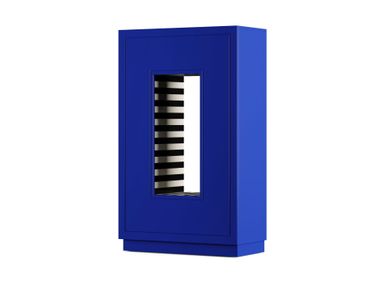
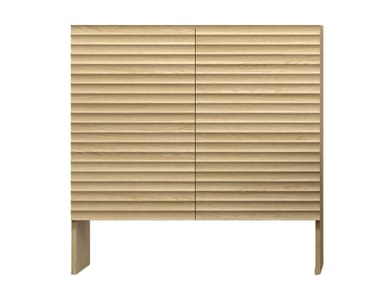
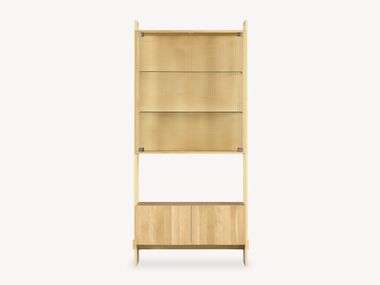
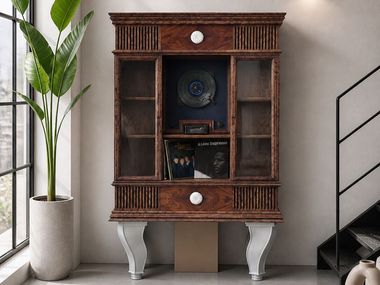
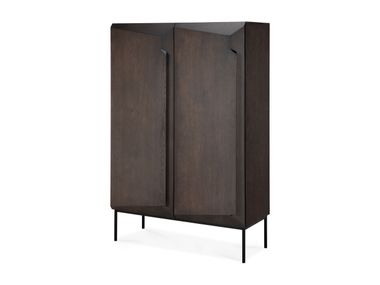
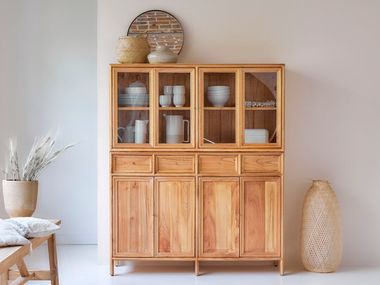
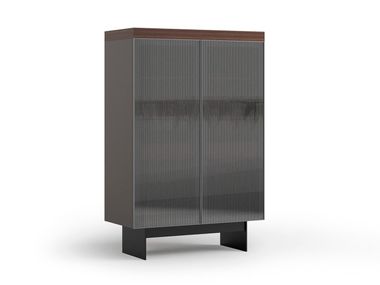
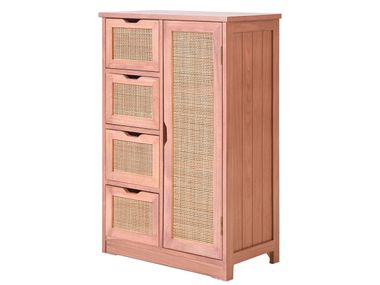
Highboards are essential storage elements in contemporary interior design, capable of combining functionality, organization, and aesthetic quality within a single structure. Historically associated with the dining room as service furniture, they are now used in a variety of settings—from the living room to the kitchen, from the entryway to hospitality spaces—thanks to their morphological versatility and the wide range of materials and finishes available. In design terminology, the highboard is distinguished from the sideboard by proportions and configuration: the former typically has a taller profile and a more vertical storage function, while the latter develops horizontally, aligning more closely with the characteristics of a low living room unit. These two types are complementary and address different needs within the overall furnishing scheme.
In interior design, the highboard has a long and layered history, evolving from a service unit into a statement piece. In the 20th century, designers such as Vico Magistretti, Arne Jacobsen, Charles & Ray Eames, and Verner Panton contributed—either directly or indirectly—to defining a new language for storage furniture, introducing principles of modularity, structural lightness, and the integration of form and function. The adoption of industrial materials, experimentation with surfaces, and attention to construction detail have positioned the highboard as a central element in the design of living spaces.
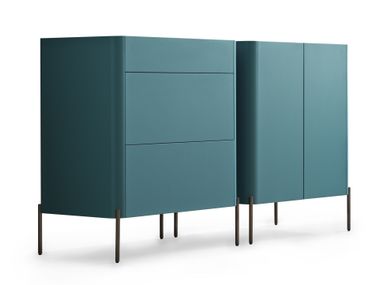
Contemporary highboards are available in numerous typological variants, defined by proportions, opening mechanisms, and internal configurations. Tall highboards, vertically developed, offer greater storage capacity and are suitable for compact environments or walls that call for a visually elongated element. Low units, more typical of sideboards, convey a lighter presence and integrate seamlessly into open-plan living rooms, doubling as surfaces for lamps, decorative objects, or multimedia devices. Wall-mounted highboards free up floor space and introduce a sense of architectural lightness, particularly appreciated in minimalist and essential design schemes.
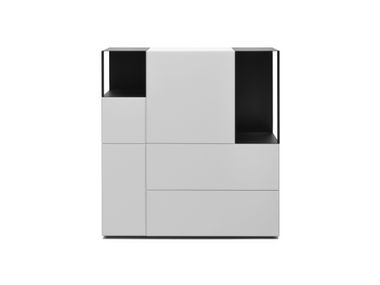
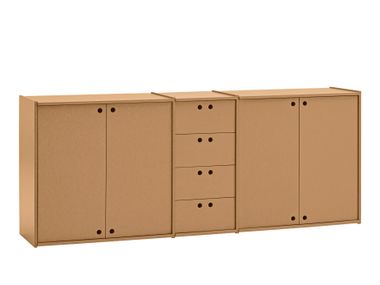
The opening mechanism plays a key role in defining functionality. Hinged doors provide direct access to the internal compartments and are a widely used solution when space is not an issue. Sliding doors, on the other hand, are ideal for corridors or recessed areas, ensuring visual continuity and broad surfaces that accommodate material contrasts or refined finishes. Highboards with drawers increase organizational potential, while configurations featuring open compartments, illuminated niches, or glass shelves introduce a more dynamic visual language—perfect for displaying objects and collections.
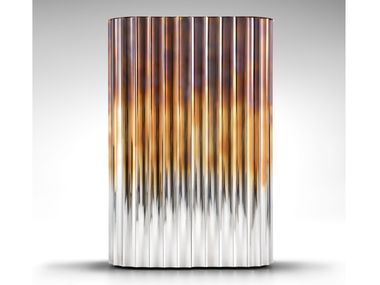
From a materials perspective, wooden highboards remain a popular choice for their solidity and their ability to adapt to diverse styles. Light-toned woods like oak and ash work well in contemporary interiors, while darker shades lend a more substantial and sophisticated presence. Combining wood, glass, and metal—even with oxidized treatments or brushed finishes—creates layered surfaces, often enhanced by matte or glossy lacquers, saturated colors, and three-dimensional textures. Metal versions, increasingly prominent in recent design, introduce a technical or industrial language ideal for urban and minimalist settings.
Selecting a highboard requires a careful assessment of functional needs, spatial proportions, and the architectural identity of the project. In kitchens and dining areas, the highboard primarily functions as a storage unit for tableware, linens, and accessories. In the living room, it becomes a spatial organizer and visual anchor. Horizontal units, often classified as sideboards, help emphasize the room’s perspective lines, while taller highboards efficiently resolve narrow walls or complex layouts. For designers, it is essential to consider internal volumes, ergonomics, and useful depth, along with clearances, doorways, and traffic flow. Wall-mounted or tall-legged highboards support visual continuity and enhance the perception of space, while light finishes and reflective materials amplify brightness. In contract or hospitality projects, the highboard often serves a technical or multimedia function, becoming an integrated element of the environment’s composition.
In contemporary design, this typology is evolving through research on opening technologies, integrated lighting, three-dimensional paneling, textured lacquers, and modular solutions. Growing attention to sustainability and durability is driving production toward certified woods, low-emission panels, water-based paints, and controlled industrial processes. The highboard is thus affirmed as a piece that merges aesthetics, efficiency, and flexibility—responding to the demands of a dynamic and multifaceted lifestyle.