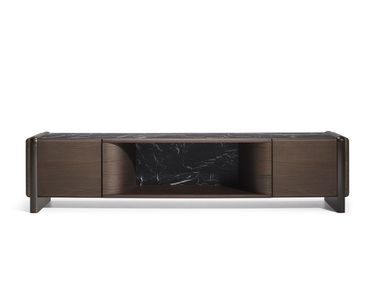
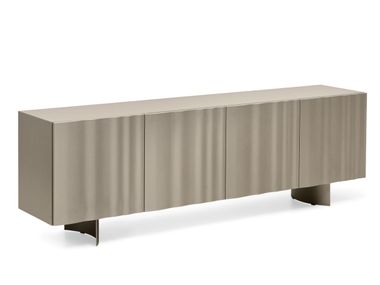
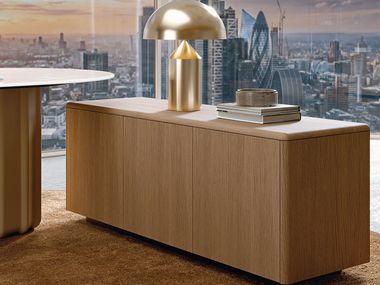
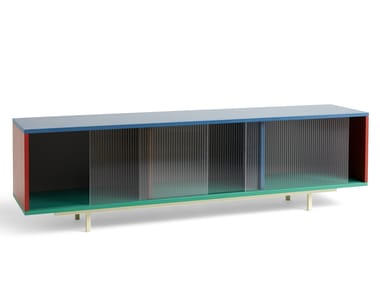
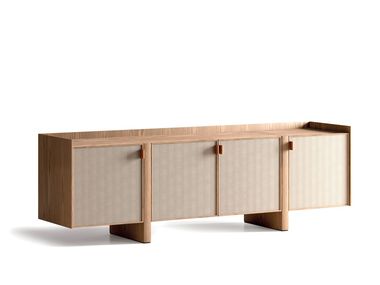
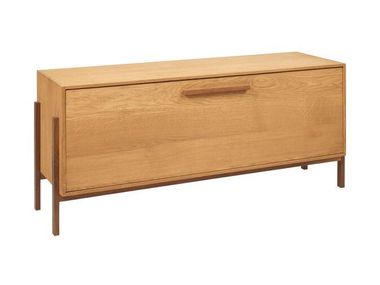
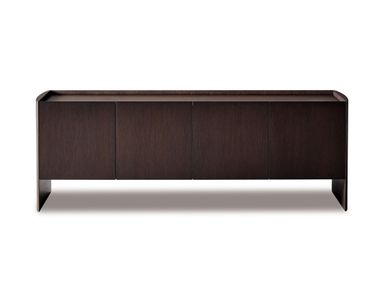
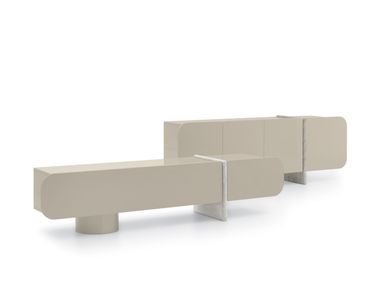
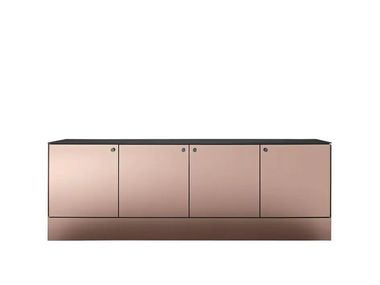
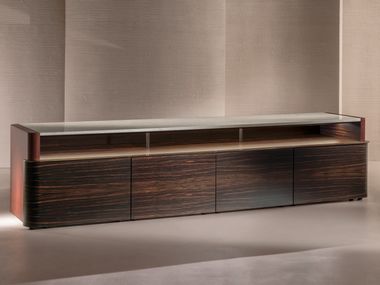
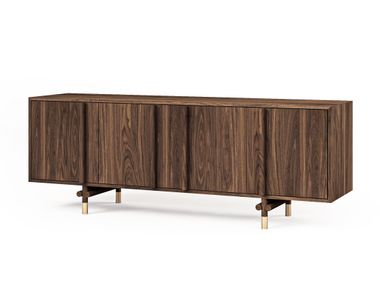
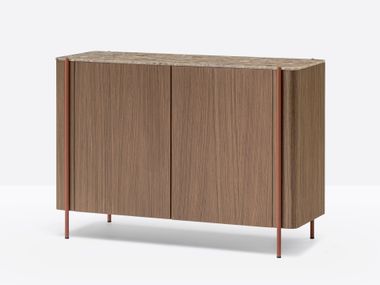
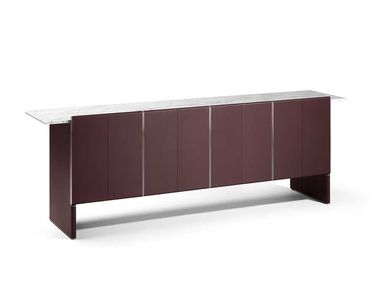
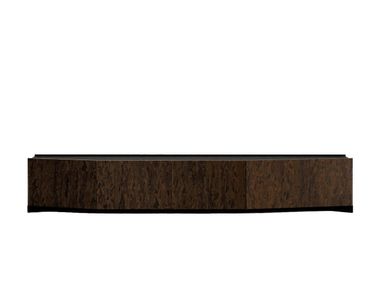
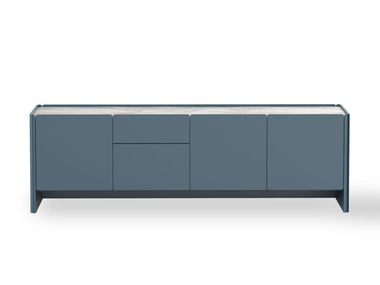
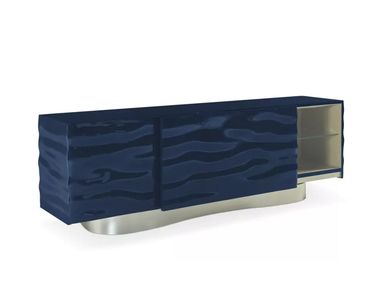
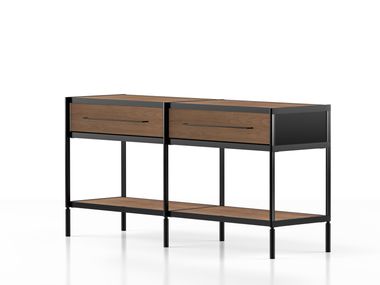
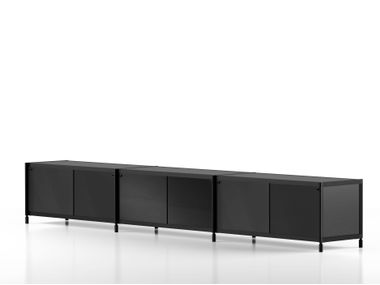
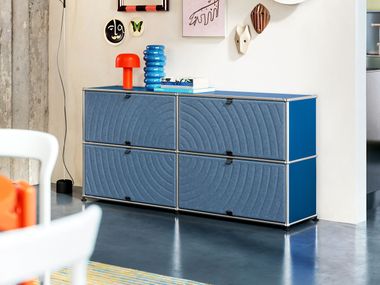
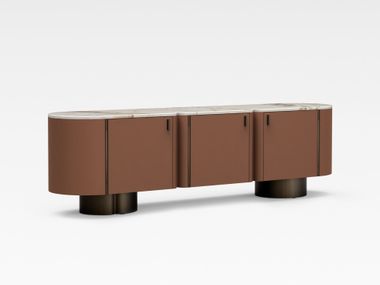
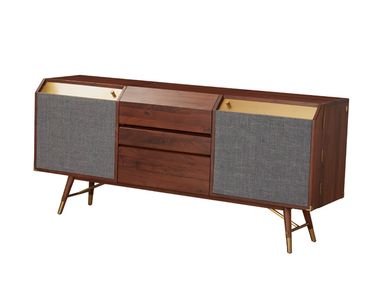
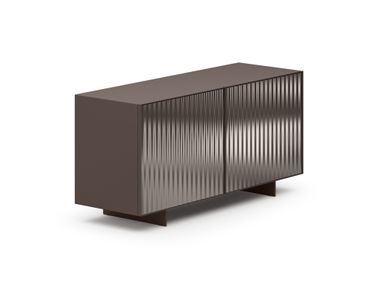
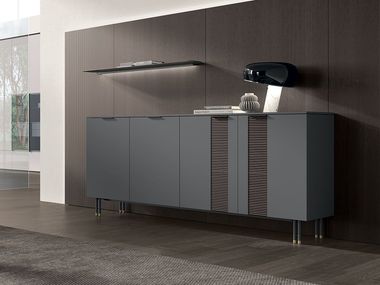
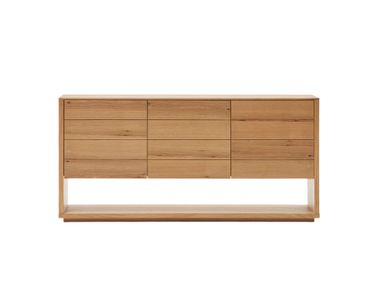
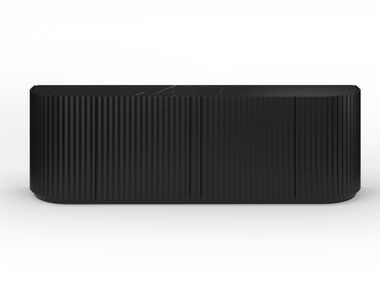
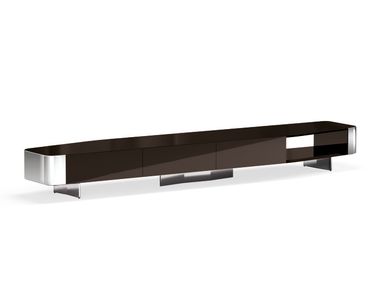
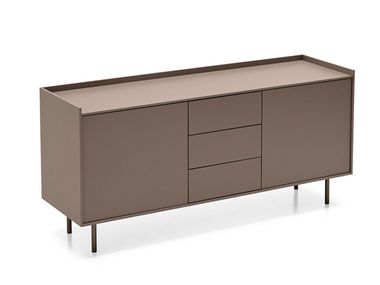
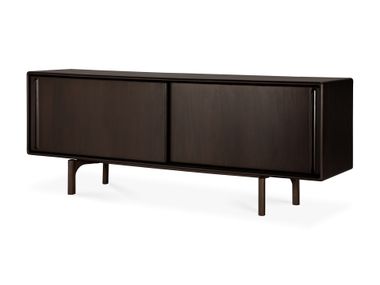
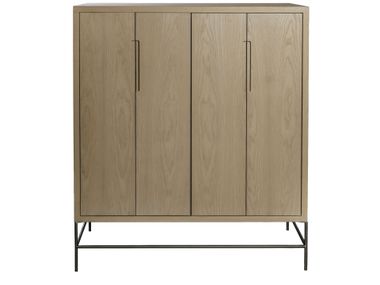
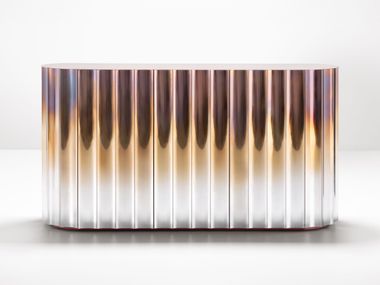
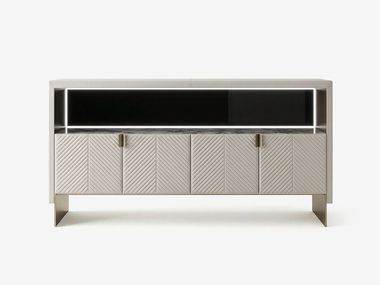
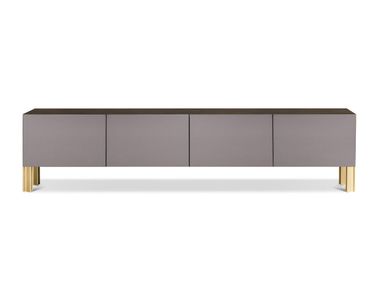
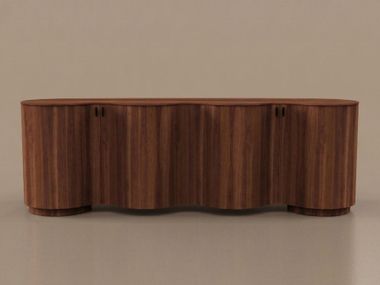
The sideboard embodies a compelling synthesis of past and future, combining its original function as a storage unit with innovative lines, materials, and features. Whether placed in a classically styled living room or integrated into a cutting-edge interior, this furnishing element commands attention. Its high degree of customization makes it a valuable ally for architects and designers seeking to merge style, practicality, and next-generation technologies. Historically referred to as a “buffet,” the sideboard was originally a functional piece placed in kitchens or dining rooms to store dishware and cutlery. Today, it has redefined its role within contemporary interior design, becoming a bold and versatile feature that enhances any space with advanced finishes and integrated technology. No longer just a support piece for meals, the modern sideboard has become a symbol of contemporary living—dedicated to beauty, compositional freedom, and the balance between function and form.
The tradition of the buffet cabinet dates back to the 18th and 19th centuries, when affluent families commissioned intricately inlaid sideboards in fine woods to showcase their status. Today, the range of materials and styles is vastly broader, reflecting contemporary furnishing trends. Choosing a sideboard depends primarily on available space and intended use. Those needing ample storage with organized interiors can opt for hinged-door models—ideal where there's enough clearance for opening. In more compact spaces, sliding-door sideboards offer a streamlined and tidy aesthetic, though they limit access to all sections at once. For smaller items, cutlery, or documents, a sideboard with drawers is a practical solution, even in a professional setting. Sideboards with tall compartments and open niches are perfect for displaying magazines, books, or decorative pieces. Increasingly common in newer models, integrated speakers turn the sideboard into a smart, captivating feature that plays music or films without the need for bulky external systems.
When it comes to materials and finishes, the wooden sideboard remains a timeless choice—ideal for bringing warmth and solidity, especially in oak, walnut, teak, or rosewood. Lacquered sideboards, whether monochrome or multicolor, are perfect for adding a vibrant, personalized touch to a space, while veneered models balance visual appeal with budget considerations. Metallic elements like steel or aluminum evoke a minimalist, industrial feel—highly appreciated in urban open-plan settings. In contrast, glass front panels or backlit crystal give the sideboard a refined, ethereal quality. For those favoring a luxury mood, finishes in leather or marble offer timeless elegance, though they require greater care. Experimental surfaces in resin, melamine, solid surface, or ceramic-effect finishes expand the possibilities for those seeking a durable and original furnishing solution—whether in private homes or contract projects.
The sideboard has proven to be a true wildcard in furniture design: it fits seamlessly into entryways as a catch-all, in bedrooms for linens and blankets, in offices for document storage, or even in bathrooms to hold towels and toiletries. This extraordinary versatility offers great creative freedom for designers, who can explore volumes, finishes, and configurations to maximize storage without compromising style. Compared to a tall cabinet or credenza, the sideboard has a lower, elongated profile, making it ideal for maintaining a light visual presence—especially in rooms with low or sloped ceilings. Lengths vary widely, from two to six doors, accommodating a range of spatial needs. Wall-mounted models create a contemporary, airy effect, while others with wood or metal legs emphasize either classic or industrial aesthetics depending on the materials and lines. In recent years, modular sideboards have enabled intelligent use of space, with customized combinations of doors, drawers, and open compartments.
In living areas, the sideboard may house multimedia equipment and serve as a TV console, while its upper surface becomes a display stage for table lamps, statement vases, or design objects. The double-sided sideboard has further expanded design possibilities: open on both sides or with pass-through doors, it functions as a subtle room divider, preserving spatial fluidity and avoiding visual barriers.
In contemporary design, certain sideboards have emerged as icons of aesthetic research and innovation. Some are historic models reissued with updated materials and finishes; others are recent creations responding to the needs of modern living. Riflesso by Cassina—originally designed by Charlotte Perriand in 1939—is an enduring example of how a 1930s concept can still shape today’s design. With its sliding doors and MDF frame, Cassina’s interpretation has turned it into a timeless classic. Tacchini’s Serie 500 revisits a concept from the 1960s and 70s—when tambour doors were widely popular—merging vertical sliding mechanisms with a vintage aesthetic and contemporary materials. The Sheraton sideboard by Acerbis, designed in 1977 by Giotto Stoppino and Lodovico Acerbis, introduced the signature rotating sliding doors that still define its identity. With its essential lines and nuanced lacquer finishes, it remains a reinterpretation faithful to Acerbis’ innovative spirit.
Free by Poliform, launched in the early 2000s, marked the brand’s stylistic renewal, combining wood surfaces and lacquered finishes into an elegant, minimalist whole. Its balanced, customizable design makes it a staple in modern interiors. Riddled Buffet by Casamania-Horm, designed by Steven Holl in 2007, brought a radical shift with its perforated wood-aluminum structure that plays with light and shadow to create a sculptural presence. That same year, Wrongwoods by Established & Sons—created by Richard Woods and Sebastian Wrong—reinterpreted sideboard tradition with a pop-inspired plywood and graphic twist.
Unit by Ditre Italia is a standout example of a double-sided sideboard that reflects open-plan living trends. Designed as a room divider that doubles as storage, it fits seamlessly into fluid interiors. Sculpt by De Castelli (c. 2020) elevates metalworking into an art form: its hand-decorated doors create textured, vibrant surfaces that blur the lines between design and craftsmanship. Around the same time, Rigadin by Alf DaFrè explored solid wood through vertical grooving inspired by tree bark, offering a warm yet sophisticated aesthetic. More recently, Superquadra by Minotti—designed in 2022 by Studio MK27 (Marcio Kogan)—draws from Brazilian modernism, combining precious woods and ashwood details in a refined, geometric composition that balances classicism and modernity.