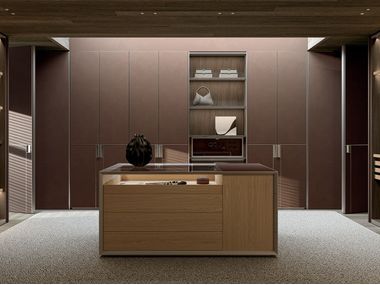
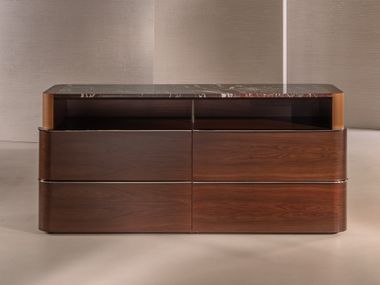
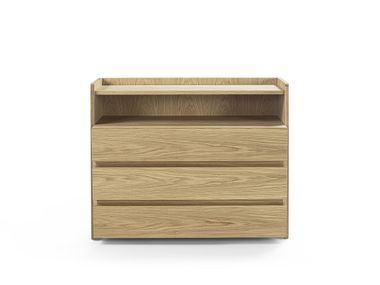
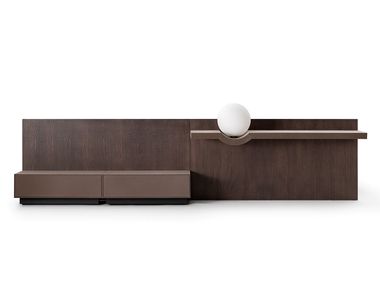
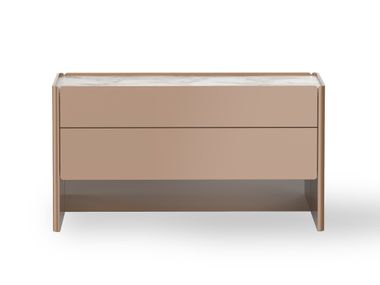
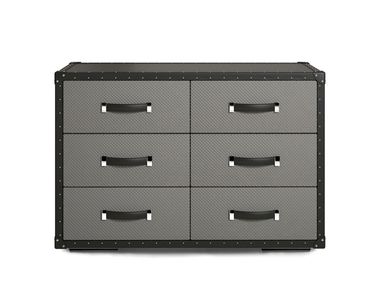
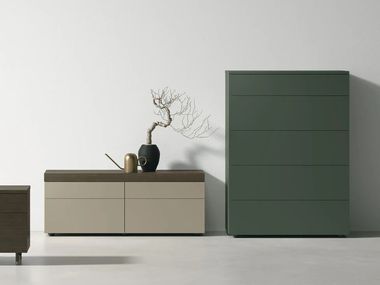
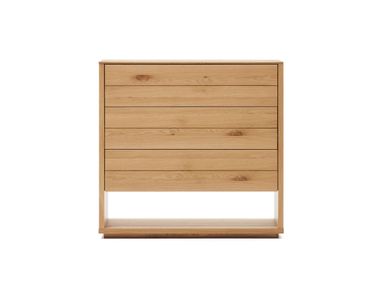
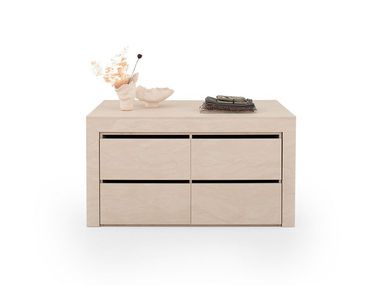
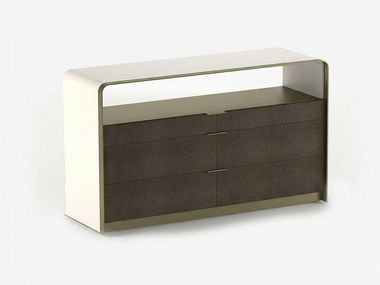
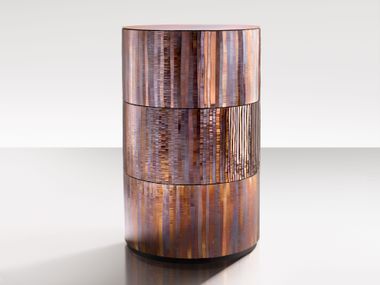
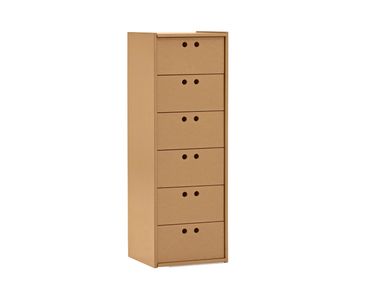
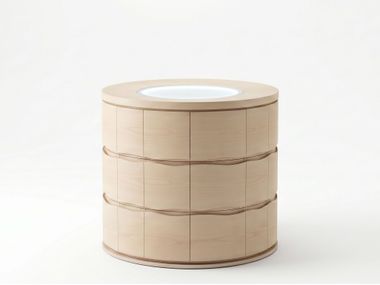
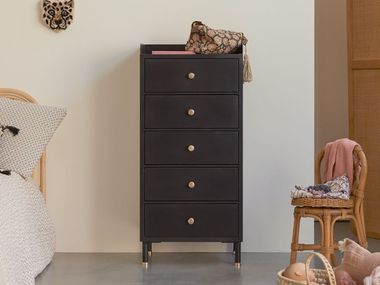
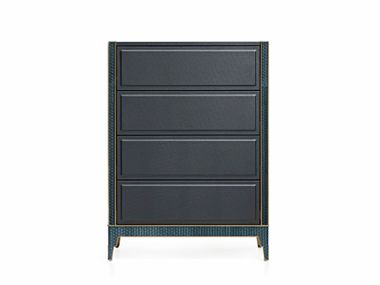
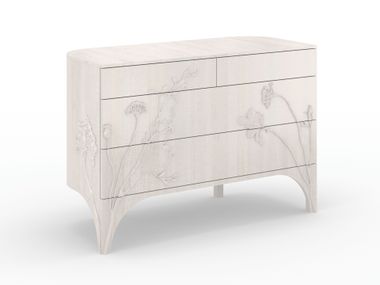
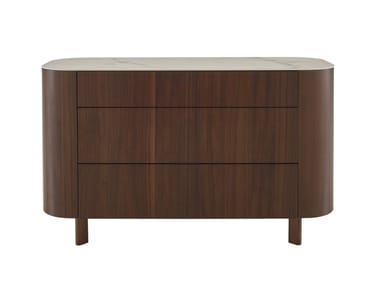
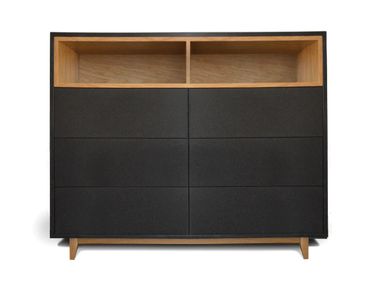
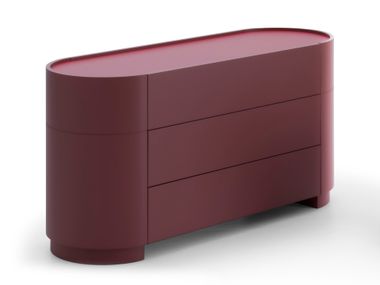
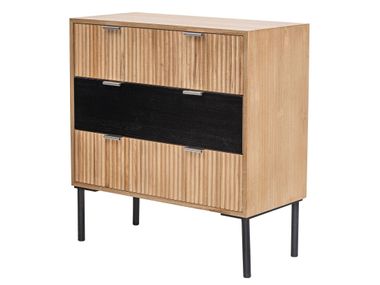
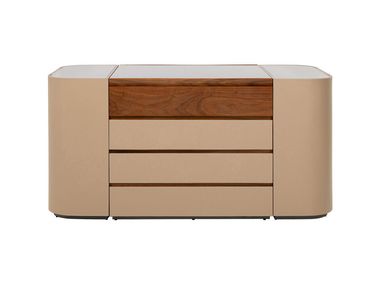
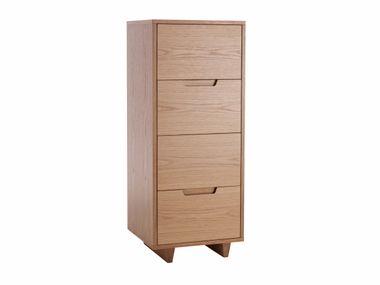
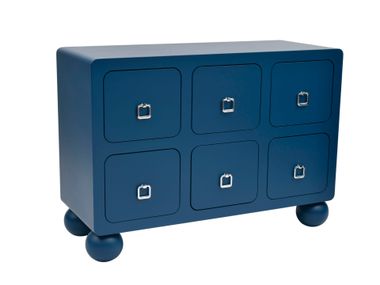
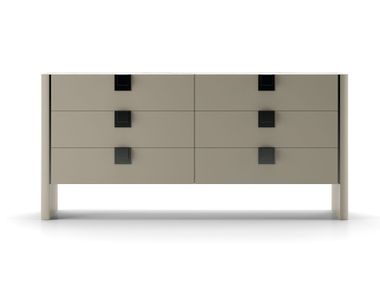
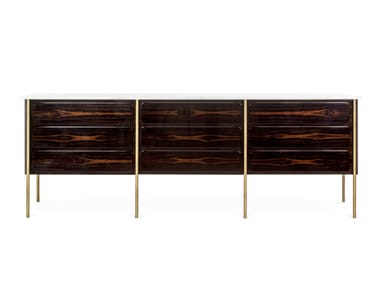
Drawer units are essential furnishing elements for organizing and optimizing space in both domestic and professional environments. Functional and versatile, they are used in residential settings—such as bedrooms, living rooms, and entryways—as well as in offices and workspaces, where they meet specific storage needs. In addition to offering generous storage capacity, modern drawer units are designed to blend seamlessly with the surrounding style, adding a touch of elegance and personality to the interior. The choice of materials, finishes, and internal configurations allows for bespoke solutions that meet the aesthetic and functional needs of each project.
Drawer units vary according to their placement, with different configurations and functions based on the context. In the bedroom, they serve as essential storage for linens, accessories, and personal items. The most common models are medium or low-height, placed near the bed or integrated into the wardrobe area; they are often used as a support for mirrors, creating a vanity station. Here, the focus is on ease of use, quality finishes, and internal organization, often enhanced by fabric dividers, dedicated compartments, or padded linings for delicate items. In the living room, the drawer unit takes on a more hybrid role between storage and decorative element. Low, horizontally developed models serve as surfaces for lamps, artwork, or decorative pieces, contributing to the compositional balance of the wall. In this space, aesthetics play a leading role, with materials and finishes chosen to harmonize with the rest of the décor, while storage is often used for less frequently accessed items or multimedia equipment.
In entryways and corridors, where space is usually tight and depth limited, tall and narrow drawer units are ideal. These vertical models are designed to optimize space without hindering movement and are especially useful for storing small objects, documents, or daily accessories, keeping the area tidy and functional. Compact proportions and easy access are key selection criteria for these pieces. In professional and work environments, office drawer units become operational tools that support organization. Positioned next to or under the desk, they often feature drawers specifically designed for storing documents and office supplies. Mobile drawer units on wheels are common, offering flexibility and allowing for quick reconfiguration of the workspace. Their interiors are optimized with accessories such as pen holders, paper trays, adjustable dividers, and— in more advanced models—locking drawers or compartments for confidential materials. Finally, modular drawer units have a cross-functional use, suitable for both residential and professional settings. Their modular nature allows elements to be added or removed, adapting the storage system to changes in space and project needs over time. In all contexts, the choice of drawer unit should respect the proportions of the surrounding furnishings, ensuring visual harmony and ergonomic everyday use.
Material choice is crucial to ensuring both durability and aesthetic quality. Solid wood drawer units remain among the most valued, prized for their sturdiness and ability to suit various styles, from classic to contemporary. Premium species like oak, walnut, and beech are commonly used, often enhanced by natural treatments that highlight the wood’s grain. Metal drawer units, with matte or satin finishes, are ideal for industrial or minimalist interiors such as lofts and open spaces. For a more contemporary solution, lacquered drawer units—available in glossy or matte finishes and a wide range of colors—offer a clean and modern aesthetic. Hybrid finishes that combine wood and metal or wood and glass present an innovative solution for those seeking a unique and refined furnishing style. The drawer opening system is a technical detail that contributes to both functionality and overall design. Traditional drawer units with exposed handles offer immediate ease of use and can be enhanced with designer handles in materials like satin metal, leather, or glass. In modern interiors, however, handleless drawer units with push-pull or soft-close sliding systems are increasingly popular for their sleek and minimalist design. For units in professional environments, features like locking mechanisms or key closures add a layer of security and privacy. Smooth sliding rails also improve everyday usability, making drawers easy to open and close—even when fully loaded.