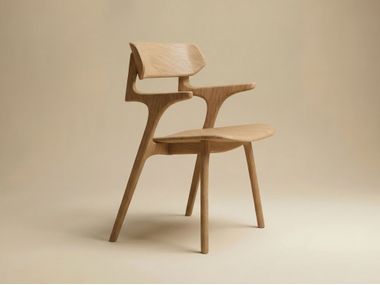
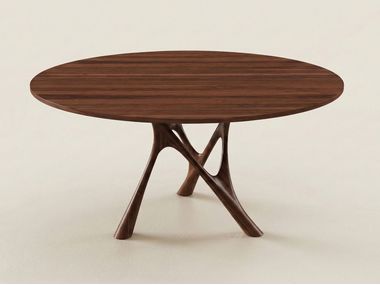
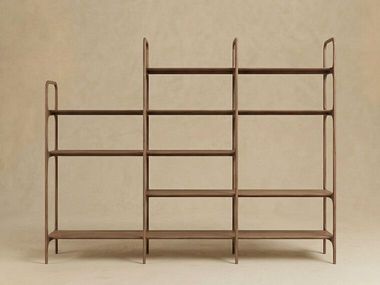
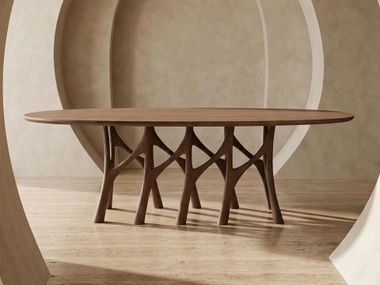
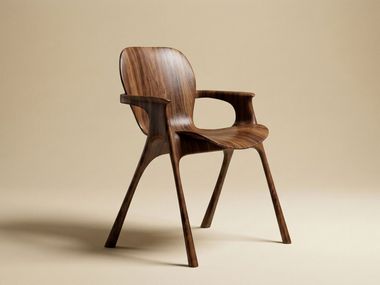
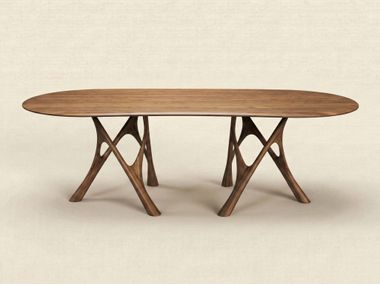
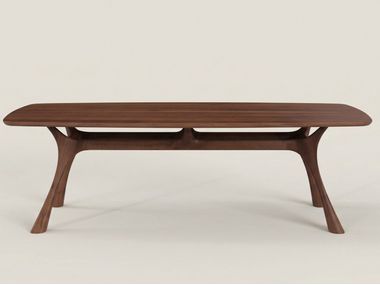
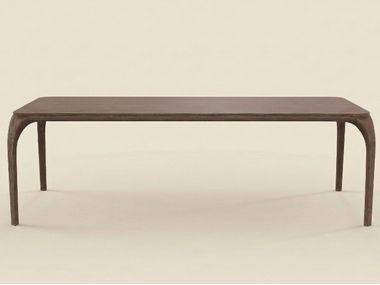
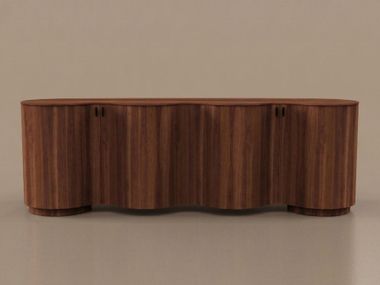
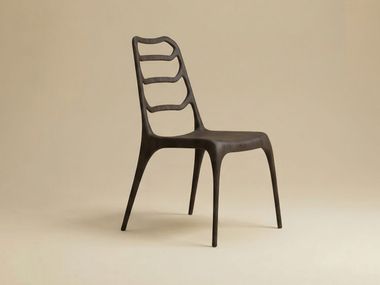
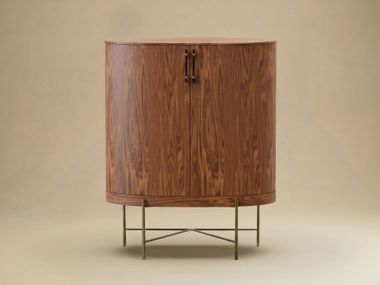
VOICU develops
solid wood furniture and objects through a design approach rooted in the relationship between material, place, and construction. Its production stands out for a research-driven practice centered on the authenticity of matter, continuity with craftsmanship culture, and a careful reading of environmental and contextual conditions. Within this perspective, design is not understood as the application of abstract formal models, but as a situated process, capable of responding to the specific qualities of both material and context. Wood is the core of this methodology: a living material, structurally expressive, employed in its full consistency and enhanced through its natural variations.
VOICU and wood design between context, material, and tradition
VOICU’s design methodology belongs to a vision that can be traced back to critical regionalism, according to which contemporary design must engage directly with the specific conditions of the place in which it originates. The result is an approach that considers locality, environmental factors, material truth, and the heritage of artisanal workmanship as active elements within the design process. In this framework, traditional techniques are neither replicated literally nor reduced to a simple formal reference, but critically reinterpreted and adapted to a contemporary sensibility. Design thus takes on the character of a synthesis between construction knowledge, material culture, and compositional rigor, avoiding universalizing standardizations and instead privileging a structural and conceptual coherence grounded in context.
VOICU solid wood furniture: material authenticity and constructional clarity
At the heart of VOICU’s production is solid wood, used not as a neutral support but as a material capable of concretely guiding form, joints, and construction techniques. Density, grain direction, anisotropic behavior, response to humidity, and thermal variation all enter the project as effective parameters, not as aspects to be corrected or concealed. Knots, fiber deviations, and internal micro-variations are likewise recognized as essential components of the object’s identity, both aesthetically and structurally. Construction solutions therefore arise from a constant negotiation between formal intention and the behavior of matter, with the aim of ensuring stability, durability, and long-term performance without excessive reliance on artificial reinforcements or corrective finishes. VOICU furniture is not conceived as a reproduction of vernacular typologies, but as the contemporary outcome of a process of abstraction and reinterpretation, defined by material integrity, structural essentiality, and functional longevity.